Quality and QHSE management

ISO 9001 and QHSE: building a manageable management system

OLING helps organisations structure or regain control of their quality management system, then integrate safety and environmental components where the QHSE scope requires them.

QHSE / ISO Certification
Clearly defined processes, responsibilities and evidence Gaps prioritised before the audit Quality or QHSE management that teams can use in practice
Scope of the service

From assessment to effective system operation

Support covers the management system and its preparation for audit. OLING can assess gaps, structure processes and evidence, prepare teams and monitor actions; certification decisions remain the responsibility of an independent certification body.

  • Context, interested parties, scope, processes, responsibilities and risks or opportunities to address.
  • Objectives, indicators, document control, competencies and controls required for the system to operate.
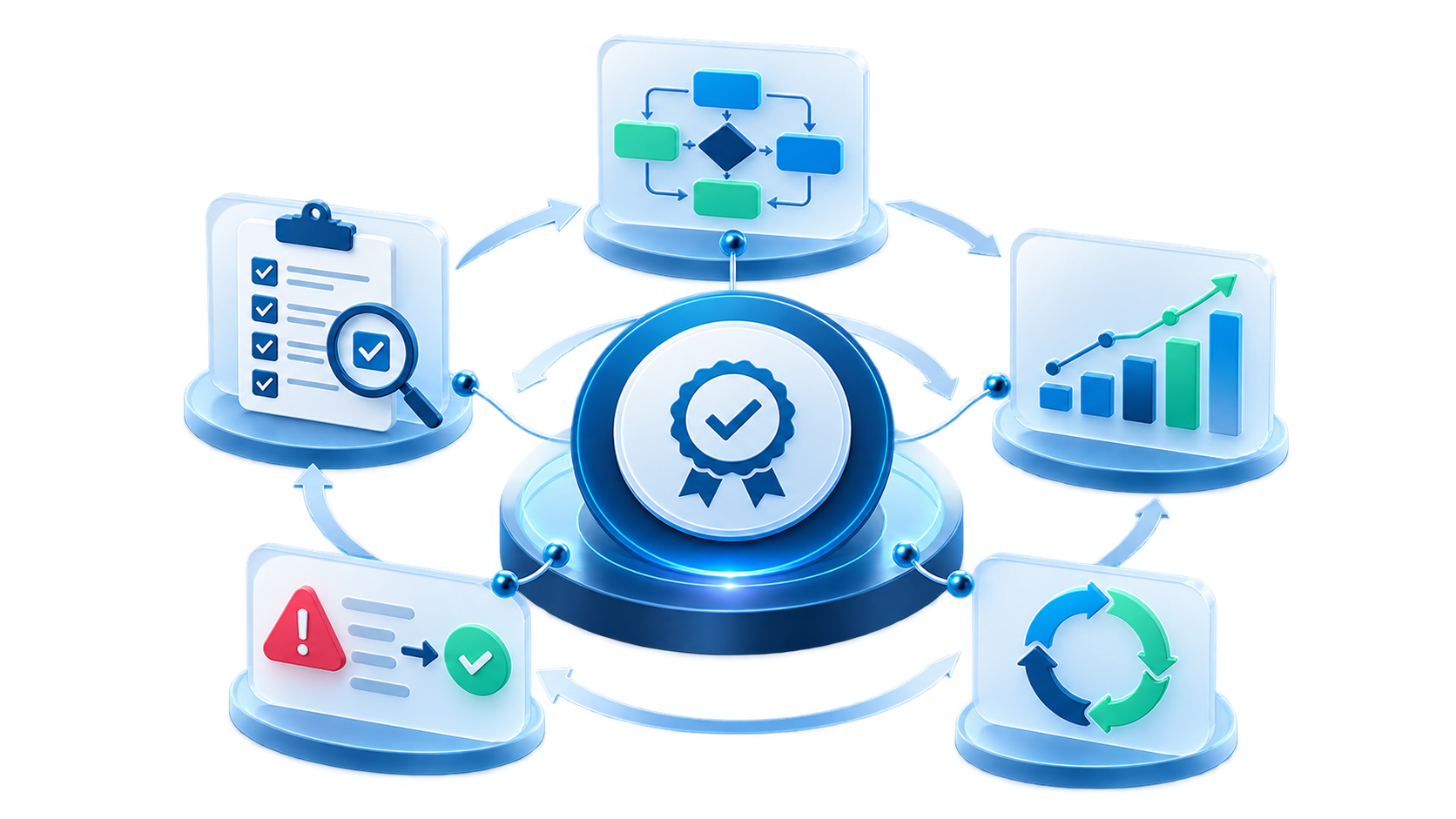
  • Internal audits, nonconformities, causes, corrective actions, management reviews and continual improvement.
  • Integration of quality, safety and environmental requirements into a coherent QHSE system when multiple standards are targeted.

Objectives

Objectives agreed with your teams

  • Clearly defined processes, responsibilities and evidence
  • Gaps prioritised before the audit
  • Quality or QHSE management that teams can use in practice
  • Deliverables defined during project scoping.
Our role

ISO 9001 and QHSE are not the same thing

ISO 9001 defines requirements for quality management. QHSE refers to an integrated approach covering quality, safety and the environment; it is not a single standard. The scope must therefore specify the applicable standards, shared responsibilities and requirements specific to each discipline.

Scope

Elements to bring under control

  • Process mapping, process owners, inputs, outputs, interfaces, performance criteria and control points.
  • Risks, opportunities, customer and regulatory requirements, measurable objectives and associated plans.
  • Relevant documents and records, approval rules, versions, distribution, retention and evidence of implementation.
  • Audit findings, nonconformities, root-cause analysis, corrective actions, deadlines, owners and effectiveness reviews.
Project stages

Preparing the organisation without producing documentation for appearance's sake

  • Define the scope and conduct an assessment based on practices, documents, indicators and interviews.
  • Prioritise gaps according to their impact, recurrence, criticality and any planned audit date.
  • Update processes, responsibilities, controls and evidence with the teams that apply them.
  • Conduct internal audits, prepare the management review, monitor actions and verify their effectiveness.
Deliverables

Quality and QHSE management deliverables

  • Gap assessment and roadmap prioritised by process, requirement, owner and deadline.
  • Process map, relevant process sheets, responsibility matrix and documentation architecture.
  • Internal audit programme and reports, nonconformity register and corrective action plan.
  • Dashboard, management review template and certification audit preparation file.
Project context

Decisions to make before an audit

  • Determine whether the objective covers ISO 9001 alone or an integrated system incorporating ISO 14001, ISO 45001 or other requirements.
  • Select a scope consistent with the activities, sites, products, services and responsibilities that are genuinely under control.
  • Prioritise critical gaps, available resources and a timeline compatible with the system's maturity.
  • Distinguish preparation, internal audits and advisory support from the decisions made by the certification body.
Your teams

Management system stakeholders

  • Executive management for policies, objectives, resources, decisions and the management review.
  • The quality or QHSE manager for methodology, coordination, audits, evidence and action tracking.
  • Process owners and operational teams for implementing controls and measuring results.
  • Internal auditors and the certification body for separately assessing system conformity and effectiveness.
Practical questions

Guidance for structuring ISO 9001 and QHSE

How should an organisation prepare for ISO 9001?

Preparation begins by defining the scope and processes, then comparing practices against the applicable requirements. The organisation prioritises gaps, assigns responsibilities, brings documents and evidence under control, conducts internal audits and holds a management review before the external audit.

What is the difference between ISO 9001 and QHSE?

ISO 9001 is a quality management system standard. QHSE is an integrated approach to quality, safety and the environment, often based on several standards. A QHSE approach must retain the requirements specific to each area while combining governance, audits and action tracking.

How should a nonconformity be addressed?

Addressing a nonconformity involves more than correcting the observed effect. The problem must be contained, its causes investigated, a proportionate action agreed, an owner and deadline assigned, and the action checked to confirm that it genuinely prevents the issue from recurring.

What is the purpose of a management review?

The management review checks whether the system remains relevant, has the necessary resources and can achieve its objectives. It considers indicators, audits, customer feedback, nonconformities, risks, changes and overdue actions, among other factors, so that decisions and responsibilities can be formally recorded.

Related projects

Examples of assignments

Transport

QHSE Compliance Management for a Major Seaport

See the scope of the OLING assignment.

Formation professionnelle

See the scope of the OLING assignment.

Formation professionnelle

See the scope of the OLING assignment.

Consultants

Meet our consultants

Photo de Dorothée Maitrias
Dorothée Maitrias
Photo de Manuel Feuillard
Manuel Feuillard
Discuss your project

Define the system, gaps and audit timeline

The initial discussion covers the scope, target standards, audits already conducted, open findings and internal responsibilities.