Data protection and governance

Make GDPR compliance operational and manageable

OLING takes charge of complex GDPR situations to map processing activities, assess risks, organise evidence and build a manageable compliance plan.

GDPR compliance: DPO, register and DPIAs
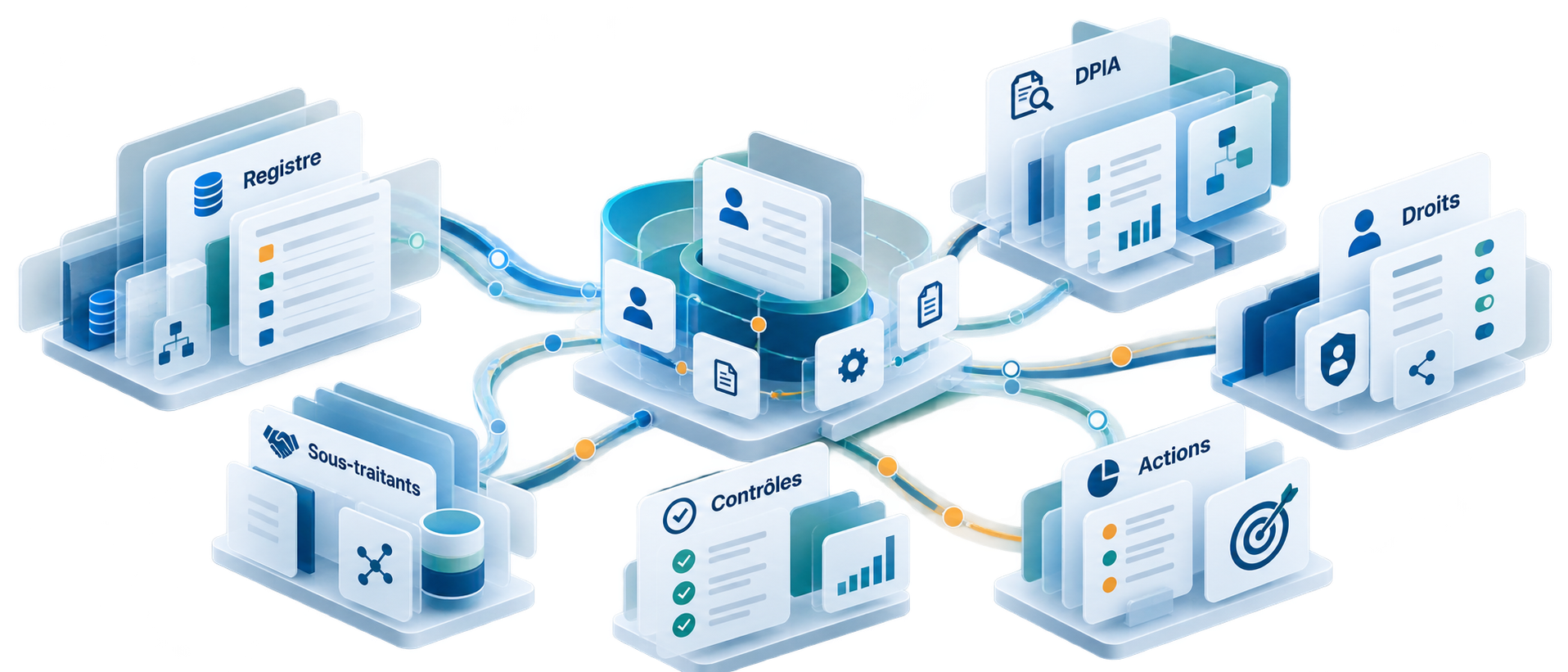
Clear view of processing activities and risks Prioritised gaps and assigned action plan Organised, auditable compliance evidence
Scope of the service

When to initiate a structured GDPR engagement

This engagement addresses an assessment, remediation or transformation need that goes beyond the routine operation of a DPO function. It connects processing activities, responsibilities, contracts, security and management decisions.

  • Rebuild the register for a single-entity or multi-entity organisation and identify processing activities, data, purposes, lawful bases and retention periods.
  • Assess gaps, risks to individuals and processing activities requiring a DPIA.
  • Verify the roles of controller, processor and joint controllers in contracts.
  • Prioritise legal, organisational and technical measures, with assigned owners and expected evidence.

Objectives

Objectives agreed with your teams

  • Clear view of processing activities and risks
  • Prioritised gaps and assigned action plan
  • Organised, auditable compliance evidence
  • Deliverables defined during project scoping.
Our role

Distinguish between a GDPR assessment and the DPO function

The GDPR engagement provides a current-state assessment and a compliance roadmap for a defined scope. The outsourced DPO then takes responsibility for ongoing coordination, formal advice, request tracking and oversight of the framework.

Scope

Processing activities and risks to document

  • Data relating to customers, users, employees, candidates, prospects and supplier contacts.
  • Data flows between applications, hosting providers, service providers, partners, recipients outside the organisation and transfers outside the European Economic Area.
  • Access rights, retention, deletion, data breaches and the associated security measures.
  • AI use cases, profiling, surveillance or sensitive data requiring an enhanced assessment.
Project stages

Take the assessment through to a managed action plan

  • Collect documents, interview business leads and compare actual practices with the existing register.
  • Assess lawfulness, data minimisation, retention, transparency, rights, privacy by design and processor relationships.
  • Score gaps according to their exposure, impact and technical or contractual dependencies.
  • Approve the roadmap, assign owners and define the evidence required for each action.
Deliverables

Actionable compliance deliverables

  • Processing activity map and consolidated register.
  • Matrix of gaps, risks and lawful bases.
  • DPIAs or a schedule of assessments to be completed.
  • Prioritised roadmap, RACI matrix and evidence file.
Project context

Decisions required from management

  • Confirm which processing activities should be retained, corrected, controlled or discontinued.
  • Decide on retention periods, access rights and security measures.
  • Require the necessary clauses, assurances and evidence from suppliers.
  • Select the future operating model: internal lead, shared DPO or outsourced DPO.
Your teams

Teams involved

  • Senior management and business leads for purposes, decisions and responsibilities.
  • The IT department and security teams for data flows, access rights, logs, incidents and technical measures.
  • Legal, procurement and HR teams for contracts, notices, procedures and sensitive processing.
  • The DPO or data protection lead for taking over and managing the framework.
Practical questions

Short answers

When should an organisation involve OLING?

OLING is relevant when an initiative affects information systems, processes, compliance or several stakeholders and requires independent scoping before decisions are made.

What deliverables can be expected?

Assignments produce diagnostics, scoping notes, roadmaps, decision matrices, action plans, steering materials and evidence tailored to the context.

Evidence

Related anonymised engagement

This example is limited to the assessment and the documented processing activities.

Property / local commerce

Semi-public company

GDPR assessment and analysis of customer data processing activities.

Scope : GDPR · customer data processing · assessment

Consultants

Meet our consultants

Photo de Florestan Rouet
Florestan Rouet
Discuss your project

Assess processing activities, gaps and priorities

The initial discussion covers the scope, sensitive processing activities, triggering incidents or inspections, and the evidence already available.